

Okay—so picture this. You’re about to send a big swap on a new AMM, slippage set tight, gas bumped, and your screen flashes “confirm.” My gut used to say: just push it. Seriously? That impulse has cost me ETH. Once. Twice. It stings. But the truth is, most of those problems are avoidable if your wallet gives you a clear, reliable simulation before you sign.
Here’s the thing. DeFi transactions are no longer simple token transfers. They’re composed interactions with contracts, oracles, relayers, bridges, and sometimes, frankly, weird third-party middleware. On one hand, that composability is the whole point—on the other, it makes every tx a tiny risk experiment. A good multi-chain wallet that simulates transactions turns that experiment into a controlled lab run, so you know what will happen (or at least what’s likely to happen) before you hand over your private key.
What transaction simulation actually does — and what it doesn’t
At its core, simulation snapshots the chain state (or a close approximation) and runs your proposed transaction against that state, without broadcasting it. You get execution traces, estimated token deltas, gas estimation, and often a breakdown of intermediate contract calls. Sounds magical. But—important caveat—simulations are only as good as the state they run against. If another big trade hits the mempool first, or an oracle updates mid-flight, reality can diverge.
So: simulation reduces uncertainty. It doesn’t eliminate it. Use it as a risk-reduction tool, not as a guarantee of outcome. I’m biased toward tools that show call-level detail, not just a generic “you will receive X” line. Seeing the actual contract calls is like reading the recipe instead of being told the cake will taste good.
Wallets with built-in simulation, especially multi-chain wallets, give you an edge because they can simulate against the exact chain you intend to use—whether that’s Ethereum mainnet, a Layer-2, or some EVM-compatible sidechain—without you having to manually fork state locally or rely on separate services.
Why multi-chain changes the game
Different chains have different semantics. Gas models vary (EIP-1559 vs. legacy), bridge mechanics differ wildly, and oracle update cadences aren’t uniform. A swap that behaves predictably on Arbitrum might fail on BSC because of how the bridge relayer handles cross-chain finality. So if your wallet supports multiple chains and simulates natively on them, you avoid a lot of nasty surprises.
Also—minor but practical—multi-chain UX often hides subtle risks. Chains with cheap fees invite aggressive MEV bots and sandwich attacks. Simulation can reveal if your swap path exposes you to front-running by showing slippage and potential adverse price movement during execution.
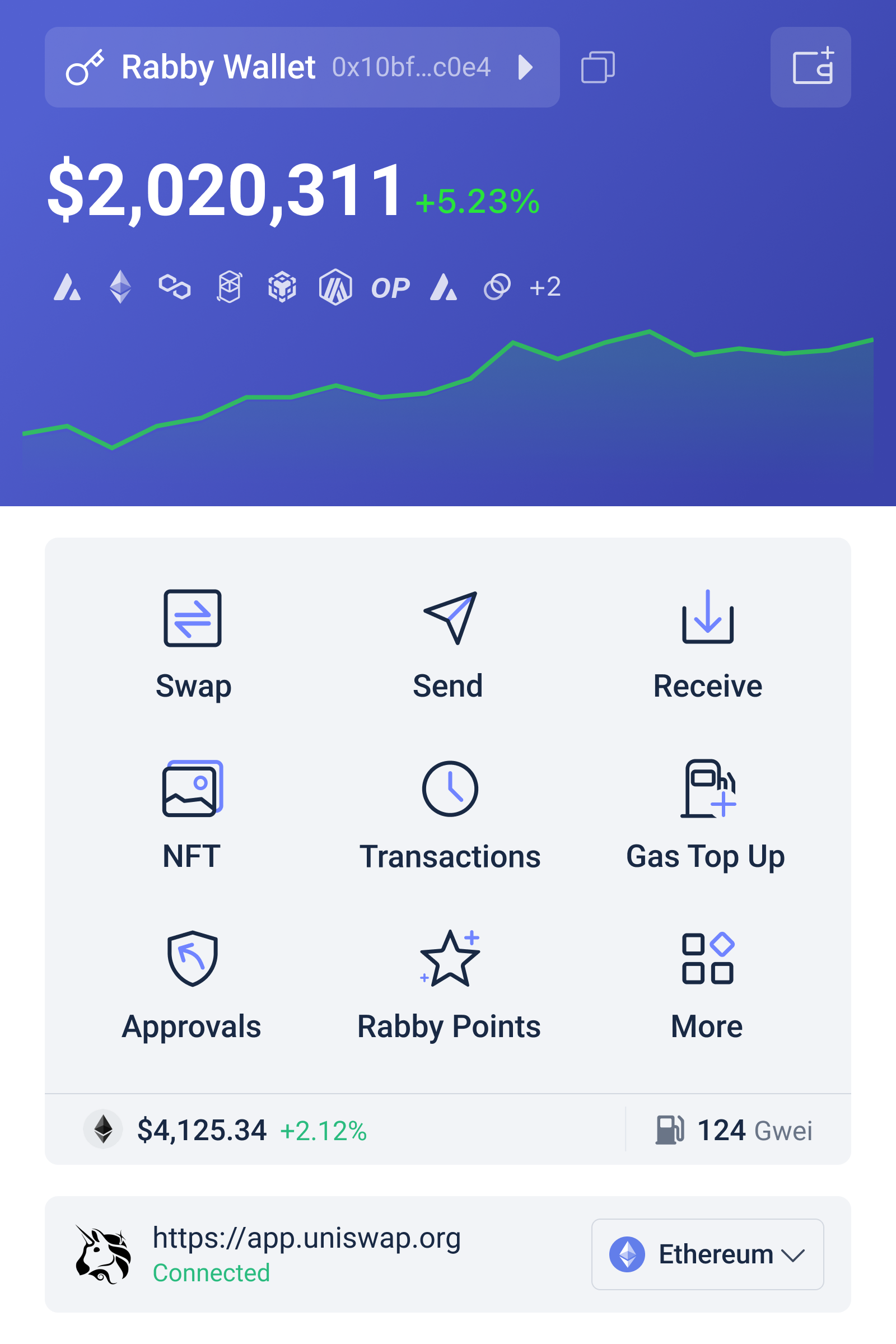
Okay, check this out—I’ve used rabby in multi-chain workflows and appreciated how it surfaces approvals and potential reverts before I sign. That little preview saved me from a failed transaction (and a gas bill) more than once.
Concrete checks a simulation should show (and why they matter)
– Call trace: which contracts are invoked, order of calls. You can catch unexpected third-party routers or hidden permission grants.
– Token deltas: how many tokens go where. If the numbers don’t add up, back away.
– Gas breakdown: an estimated fee and where gas is consumed. Helps detect infinite loops or costly reentrancy patterns.
– Approval scope: does the tx increase allowances or transfer via a permit? Confirm whether you’re granting unlimited access.
– Potential revert reason: some sims show why the tx would fail. That’s gold—saves you the gas for a doomed attempt.
These aren’t flashy. They’re practical. A wallet that hides or glosses over these is just a prettier signing prompt.
How simulation ties into security practices
Simulations fit into a broader security checklist. Quick list—do these before you sign:
1) Preview the call trace.
2) Confirm allowance targets (and avoid unlimited approvals).
3) Check gas and whether a replacement transaction might be needed.
4) Consider hardware signing for high-value ops.
5) If bridging, simulate both the send and the expected mint/claim on the destination chain.
On one hand, a simulation may show a successful path; on the other hand, your transaction can still be MEV’d. So progressive defenses like using private relays, time-weighted execution, or setting gas limits can complement simulation. Actually, wait—let me rephrase that: simulation tells you the likely path, and private relays may reduce the chance that mempool snipers see you first. They work together, though neither is a silver bullet.
Technical approaches wallets use to simulate
Wallets typically use one of three approaches: a) off-chain RPC simulations against a node snapshot, b) forking a recent block and running the tx locally, or c) leveraging third-party simulation services that provide enriched analysis. Each has tradeoffs in timeliness and cost. Forked simulations are usually the most accurate for a specific state, but they’re heavier to support in a lightweight wallet.
For user-facing wallets, the UX matters more than the exact simulation method. You want clear actionable outputs—did it revert? Estimated out amounts? Any approval increases? If the interface shows these things cleanly, the underlying method can be swapped later without breaking trust.
Practical tips for power users
– Always simulate multi-call transactions. Batch ops hide intermediate failures.
– Be cautious with “max approval” buttons. Simulate the approve + transfer sequence to see if a later call would exploit that scope.
– When bridging, simulate both departure and arrival chains; if your wallet offers cross-chain simulation, use it.
– If gas estimation looks suspiciously low, bump it manually or pause. Weirdly low estimates can mean the sim didn’t model a failing path.
– Use hardware wallets for high-value permissions—simulation gives you the expected behavior, the hardware gives you a manual OT that stops remote compromise.
I’m not saying simulation replaces an audit or your own due diligence. I’m saying it moves the needle from guessing to informed action.
FAQ
How accurate are simulations?
They’re usually pretty accurate for immediate, single-block outcomes if they’re run against the current state. But accuracy drops if the mempool oracles or other actors change state between simulation and inclusion. Use simulations as a probabilistic tool: high confidence, not absolute certainty.
Can simulation prevent front-running or MEV?
Not by itself. Simulation reveals vulnerability (e.g., large slippage exposure), which you can then mitigate with strategies like private relays, tighter slippage, or alternative execution paths. Think of simulation as a detector, not a shield.
Do simulations work for cross-chain bridges?
They can for the originating chain and for any on-chain mint/claim that’s deterministic, but cross-chain finality and off-chain relayer behavior introduce uncertainty. If your wallet simulates both sides, you reduce guesswork—still, expect some residual risk from off-chain processes.
Alright—so here’s the takeaway wrapped in a plain sentence: if you care about minimizing gas-waste, failed transactions, and surprise losses, use a multi-chain wallet that simulates transactions natively and shows you the call-level detail. It’ll save you time, money, and a few gray hairs. I’m not 100% certain that every sim will catch every edge case (nothing will), but combined with hardware signing and sane allowance practices, simulation is one of the best practical defenses we have right now.